
Evaluate a festival lineup: a promoter's workflow
A workflow for promoters — use Cultiq to judge which artists fit an event, read demand and audience overlap across a lineup, and package the data sponsors need.
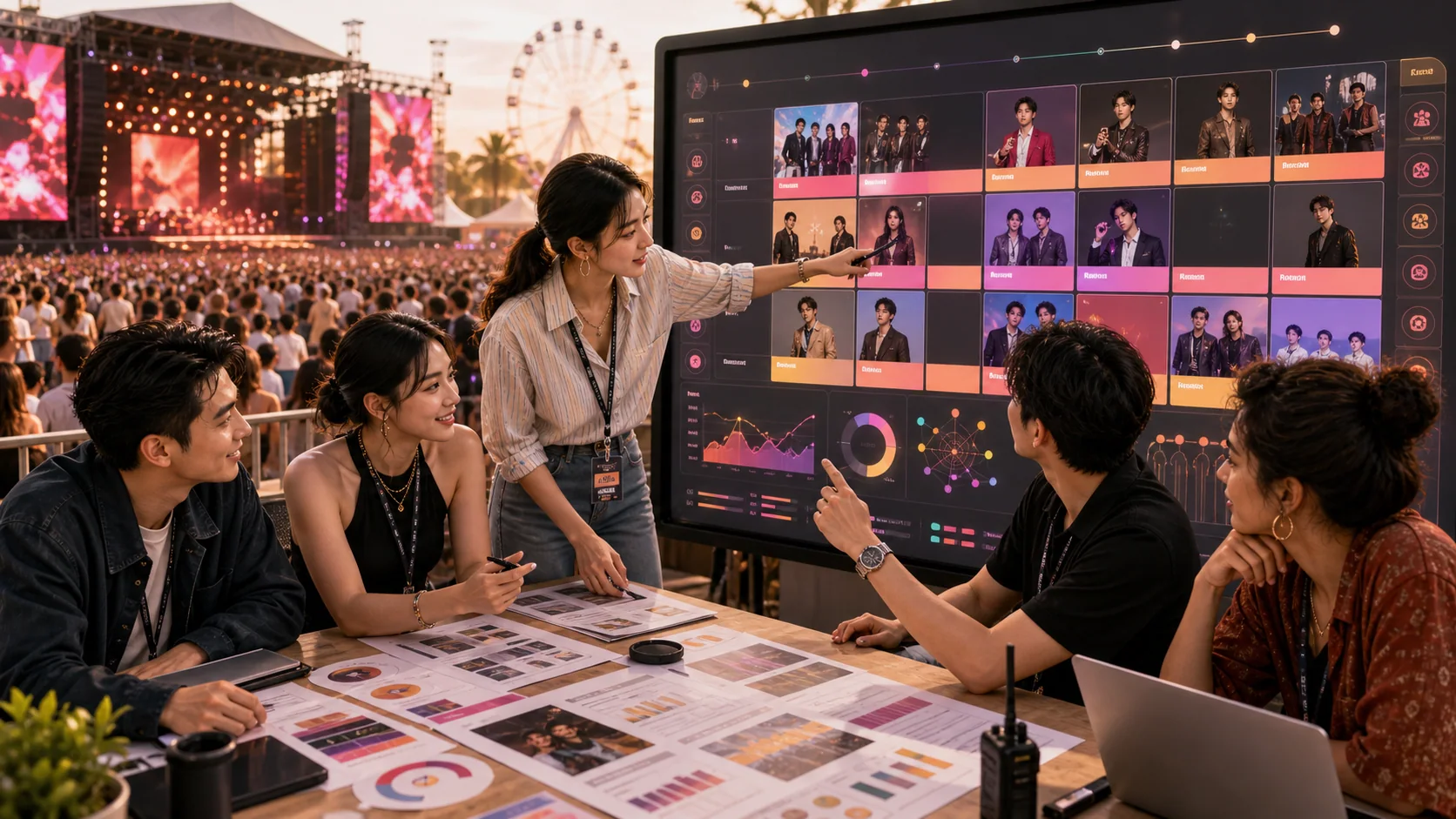
- Capacity is the size of the opportunity. Demand and audience fit are whether it's real. Evaluate the lineup on the second two, not the first.
A lineup is a portfolio decision, not a wish list. Each act carries a cost, an audience, and a demand profile — and the ones that sell tickets aren't always the ones that attract sponsors. This workflow uses Cultiq to evaluate a lineup the way a sponsor will: who pulls real demand, whose audience overlaps the event, and which names you can actually package into a deal.
Start with the event brief, not the headliner
A festival lineup has a job: fill a venue, in a market, for an audience, at a cost that pencils out — and ideally with sponsor revenue attached. Before you evaluate any act, write that brief down: target market(s), the audience you're selling to, the budget envelope across the lineup, and the sponsor categories you want to attract.
Load it into your Cultiq profile so artist cards and fit scores are measured against your event, not a generic popularity read. A lineup evaluated against a clear brief stays balanced; one evaluated against vibes drifts toward whoever's trending.
TakeawayCapacity is the size of the opportunity. Demand and audience fit are whether it's real. Evaluate the lineup on the second two, not the first.
Lens 1: demand, not capacity
Open Artist Discovery, choose your market, and shortlist the acts in contention. For each, open the profile and read the Intelligence momentum view and Live Signals.
You're judging pull, not headcount. A name that's huge globally but cooling in your market is a weaker booking than a rising act with concentrated local demand. Read momentum and timing together: is the artist entering a cycle (release, tour, cultural moment) that will still be hot on your event date?
Lens 2: audience overlap across the lineup
A lineup isn't five separate bookings — it's one audience you're assembling. Use the Audience tab on each candidate to check two things:
- Overlap with your event audience — does this act pull the people you're actually selling tickets to?
- Complement across the lineup — do the acts broaden reach into adjacent markets and demographics, or do they all pull the same crowd?
Balancing the lineup this way gives you a wider, more defensible audience story — which is exactly what the next lens needs.
Lens 3: package the sponsor fit
Sponsors don't buy a slot; they buy a documented audience and demand. For each act (or the lineup as a set), use FitMatrix to score fit against a target sponsor's profile across the eight dimensions — Category Affinity, Audience Match, Market Coverage, Objective Alignment, Budget Fit, Deal Type, Platform Reach, Risk Profile.
That turns a sponsor pitch from "headline our stage" into something a brand can evaluate: here's the audience overlap with your buyer, here's the demand, here's the fit score and where it's strong. The same scoring also helps you match the right sponsor to the right act, rather than offering every brand the whole lineup.
The strongest sponsor deck isn't a list of names. It's proof that this audience, at this moment, is the audience the sponsor is paying to reach.
Assemble the decision
Bring it together: an anchor or two for demand, complementary acts for reach, a rising name for momentum, and for each one a one-line case — demand in your market, audience overlap, and the sponsor category it unlocks. Save the set to My Matches and move the strongest sponsor pairings into a request.
That's a lineup you can defend to a venue, a finance lead, and a sponsor — built on demand and fit, not on whoever was loudest this quarter.
Start your lineup review
Pick your market, shortlist the contenders, and run the three lenses on each. Open Artist Discovery or create a free account to begin.
For the deeper logic of pricing and packaging live sponsorships, read Concerts as canvas. For broader event and partnership strategy with hands-on support, visit WENOTIFT.
Frequently asked questions
Promoters and event teams can use the same artist intelligence — tier, audience, and momentum — to evaluate which acts fit an event and to assemble the evidence sponsors need. Brand-fit scoring also helps you match the right sponsor to the right act.
Read demand and momentum together, not capacity. Cultiq's Intelligence view shows whether an artist's pull is sustained and which markets it's strongest in — a better predictor of turnout in your territory than follower count.
Sponsors buy documented audience and demand, not a logo on a banner. Cultiq gives you each act's audience overlap with a sponsor's target and a fit score you can put in the deck — so the pitch is evidence, not assertion.

Plan partnership measurement before artist outreach
Define decision-ready artist partnership measures before outreach, using Cultiq evidence without promising results the data cannot guarantee.

Check category conflicts before artist outreach
Prepare a focused artist category-conflict check using Cultiq evidence without assuming exclusivity, availability, or legal clearance.

Artist managers: answer brand objections with evidence
Prepare credible, evidence-based responses to common brand partnership objections using Cultiq without overpromising.