
Choose a concert activation format before you seek a sponsorship package
Use this Cultiq planning guide to choose between hospitality, sampling, content capture, fan participation, and retail-linked concert activations before evaluating live-event sponsorship opportunities.
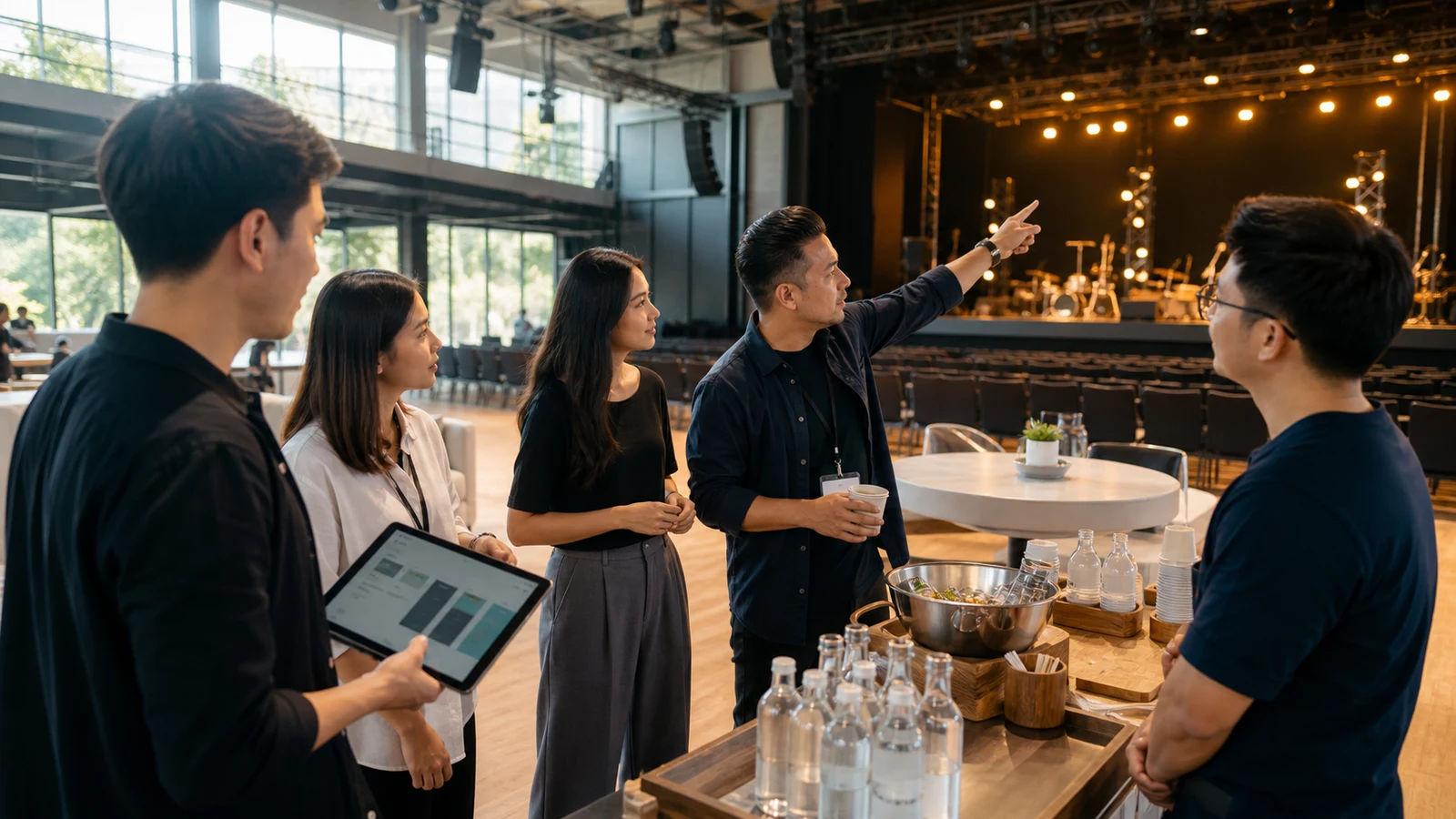

- Choose the activation format before you choose the sponsorship package. Otherwise, the package shapes the idea instead of the campaign objective shaping the package.
- Live-event fit is not just audience size. It is the ability to deliver a specific experience in a specific place, on a specific timeline, under confirmed rights and operating conditions.
The right concert is only half the decision. Before you ask what a sponsorship package contains, decide what the brand needs people to do at the event—and use Cultiq to test which live opportunity can support that role.
Start with the fan action, not the event name
“We should sponsor a concert” is a direction, not an activation plan. A live event can support very different brand jobs: introduce a product, create a premium hospitality moment, collect opt-in interest, invite fan participation, generate approved content, or connect a physical moment to retail or ecommerce. The event that is strongest for one job may be a poor fit for another.
That is why the first question is not “Which concert has the most attention?” It is “What do we need an attendee to experience, do, or remember?” Once the answer is clear, Cultiq can help the team compare live opportunities against the brand profile and test the trade-offs with artist and other partnership routes.
This is a pre-qualification framework. It does not assume an event has inventory, artist access, data rights, category clearance, content rights, or a specific benefit. Those are questions for the event owner and authorized representatives.
TakeawayChoose the activation format before you choose the sponsorship package. Otherwise, the package shapes the idea instead of the campaign objective shaping the package.
Define the live-event job in one sentence
Write a sentence the team can use throughout discovery:
We are exploring a live-event partnership in [market] to help [audience] [desired action or experience] through [activation format], subject to confirmation of inventory, rights, approvals, timing, and commercial terms.
For example, a brand may want a product trial moment before doors open, an invitation-only hospitality experience for a priority audience, or a participatory fan installation that makes the brand useful in the venue. The point is not to make the sentence sound polished. It is to prevent five teams from using “engagement” to mean five different outcomes.
Name the operating constraints as well: city, season, venue environment, audience age requirements, product restrictions, staffing, accessibility, data policy, and post-event follow-up. A great idea that cannot physically operate at the venue is not a strong activation.
Compare five activation formats
| Format | Best planning question | What to confirm before assuming it works |
|---|---|---|
| Hospitality | Can we create a meaningful hosted experience for a defined audience? | Space, access rules, guest allocation, service standards, and any artist association |
| Sampling or product trial | Can attendees try the product safely and conveniently? | Venue rules, product category restrictions, staffing, storage, waste, and consent requirements |
| Fan participation | Can the brand give fans a simple activity worth choosing? | Footprint, queue management, creative approval, accessibility, and operational ownership |
| Content capture | Can the moment produce approved content with a clear use case? | Filming permissions, talent and attendee releases, platform rights, editing, and usage term |
| Retail or commerce link | Can the event moment connect to a measurable next action? | Permitted calls to action, offer mechanics, local rules, technology, data handling, and fulfilment |
These formats can combine, but do not stack them simply because they sound valuable. A hospitality moment and public sampling operation have different footprints, teams, costs, and success definitions. Pick one primary job and one supporting job. That makes the request easier to evaluate and protects the attendee experience from becoming a collection of disconnected tactics.
Use Cultiq to pressure-test the opportunity
Once the format is selected, open the brand profile and make sure the inputs reflect the live brief: target market, audience, category, budget context, campaign objective, and timing. Then compare concert, tour, artist, or other relevant opportunities in FitMatrix.
Read the result in this order:
- Objective alignment: Does the live format help the brand accomplish the specified job?
- Market coverage: Is the opportunity relevant where the activation must happen, rather than merely visible elsewhere?
- Audience match: Is the audience context appropriate for the people the brand needs to reach?
- Deal type and budget fit: Is the proposed route plausible for the planning context, without mistaking a planning range for a quote?
- Risk context: What public or operational questions deserve a closer look before the team advances?
The score is a comparison tool, not proof that the package contains your preferred assets. Use it to decide which opportunities deserve a qualification conversation and what questions should lead that conversation.
Set a success signal that suits the format
Agree on what a useful outcome would look like before the package discussion begins. A hospitality route may be judged by the quality of an invited experience and follow-up conversations, while a sampling route needs a practical plan for distribution and attendee flow. A fan-participation idea may need evidence that people chose to engage rather than simply passed a branded backdrop. A retail-linked concept needs a compliant, clearly owned path from the venue moment to the next action.
Do not turn these into invented promises or universal event benchmarks. They are planning signals, not guaranteed results. Name the source of evidence the team can realistically collect, who will own it, and what permissions or consent requirements apply. This also tests the value of the activation: if the team cannot describe a responsible way to observe whether the desired attendee action occurred, the format may still be too vague.
Keep the signal connected to the objective. A high footfall count does not validate a product trial strategy if attendees could not try the product. A large number of event photos does not validate a content plan without approved rights and a defined use. Cultiq helps select the opportunity; the activation plan must still define how the brand will operate and learn from the moment.
Build a format-first request brief
Before seeking a sponsorship package or submitting a match request, prepare a concise brief that separates requirements from possibilities.
Required
- The event market and date range.
- The primary attendee action or experience.
- The activation format and essential operational footprint.
- The audience, category, budget, and brand-safety constraints.
- The minimum decision-making information needed from the event side.
Preferred
- Secondary fan moments or content extensions.
- A particular placement, hospitality route, or commerce mechanic.
- Optional media amplification or post-event use.
- Artist-adjacent elements that the campaign would value but cannot assume.
To confirm
- Available inventory and category exclusivity.
- Venue permissions and production responsibilities.
- Rights for content, logos, footage, or talent association.
- Data collection, consent, and follow-up rules.
- Commercial terms, taxes, insurance, security, and cancellation provisions.
This structure makes a conversation more productive because it gives the event side a clear objective without presenting unconfirmed benefits as included. It also gives internal stakeholders a way to decide whether an alternative route is acceptable if the preferred format is unavailable.
TakeawayLive-event fit is not just audience size. It is the ability to deliver a specific experience in a specific place, on a specific timeline, under confirmed rights and operating conditions.
Avoid four common traps
- Buying reach when the brief needs participation. A large event can be weak if the brand has no credible place for attendees to act.
- Asking for “content rights” without a use case. State the channels, territory, term, paid use, editing, localization, and approval needs.
- Treating artist access as a default benefit. Artist involvement needs separate confirmation and can carry its own scope, rights, approvals, and commercial discussion.
- Letting the package define the objective. If the only available asset is a logo placement, decide whether that can genuinely accomplish the live-event job before changing the campaign story to fit it.
Choose the next best conversation
Use concert discovery and FitMatrix to narrow opportunities that can support the activation format. Then prepare the format-first brief and take the most relevant option into a qualified conversation through Cultiq. If an artist partnership or an IP opportunity supports the objective better than a concert sponsorship, compare it honestly rather than forcing a live-event answer.
For broader perspective on the entertainment and live-event landscape, visit WENOTIFT.
Frequently asked questions
No. Assets, access, inventory, rights, approvals, artist involvement, and commercial terms vary by event and must be confirmed with the authorized event and artist-side parties.
Not necessarily. The best option depends on the campaign objective, market, audience, activation feasibility, timing, budget context, and risk—not ticket scale alone.
Cultiq's FitMatrix can help teams compare artists, concerts and tours, and other opportunity types against the same brand profile. The final choice still requires human judgement and confirmation of live terms.

Build a live-event sponsor portfolio in Cultiq
Compare several concerts as one sponsor portfolio, assign each show a role, and prepare a clearer brand conversation with Cultiq.

Review an announced tour before sponsor outreach
Use Cultiq’s upcoming-tour context to structure sponsor timing, market, and validation questions without assuming inventory, demand, availability, or approval.
Build a sponsor-ready live-event prospectus
Build a practical live-event sponsorship prospectus with Cultiq: define the opportunity, audience context, assets, constraints, and questions to confirm.