
Build a sponsor-ready live-event prospectus
Build a practical live-event sponsorship prospectus with Cultiq: define the opportunity, audience context, assets, constraints, and questions to confirm.
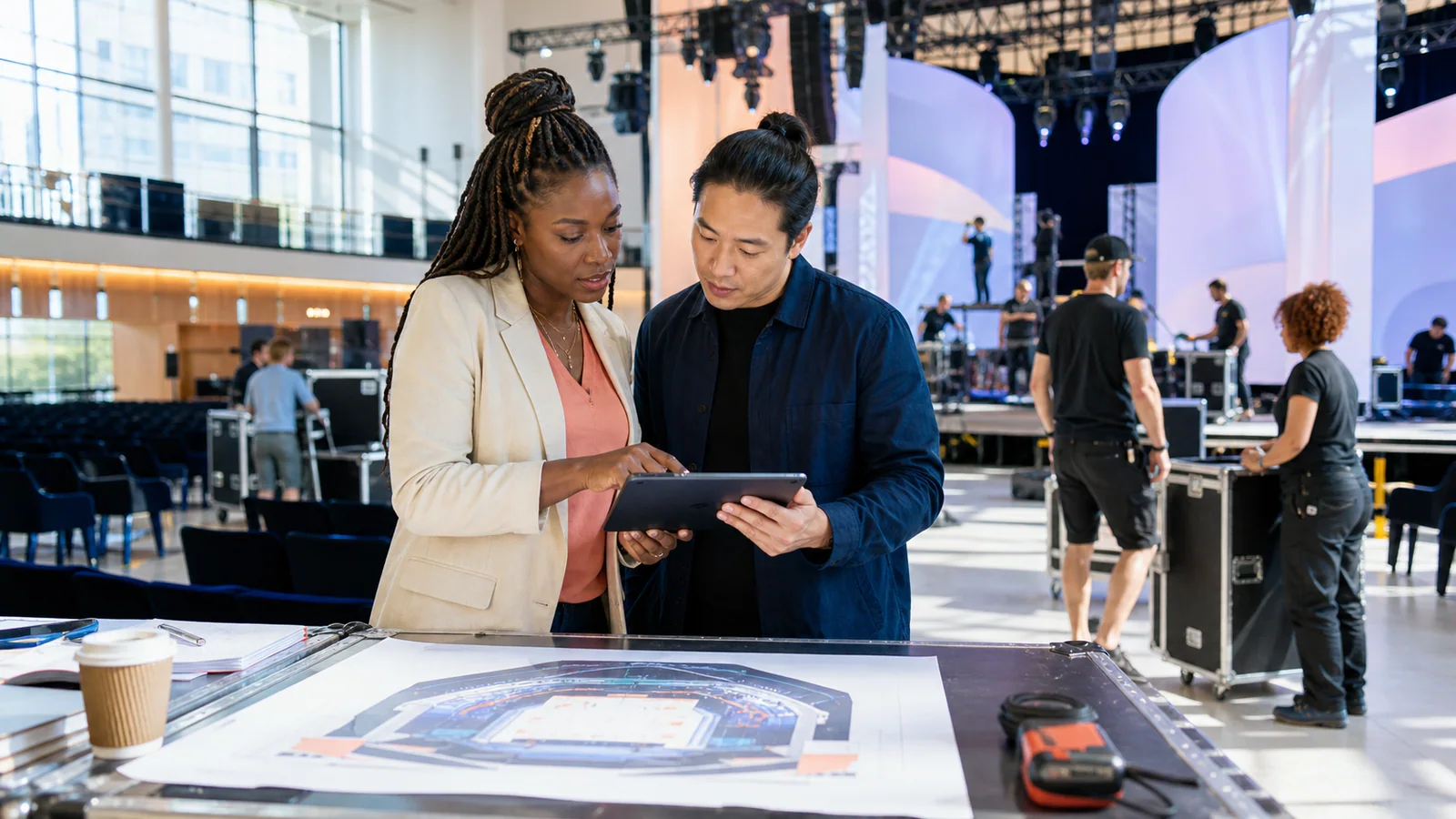

- A strong prospectus sells clarity first: a relevant audience, a useful brand role, an honest asset list, and a defined route to confirmation.
A credible sponsor prospectus makes a live opportunity easier to qualify. It explains the audience and market rationale, proposed brand role, confirmed assets, open constraints, and decision path without promising results.
A sponsor prospectus should make an event opportunity easier to evaluate, not make it sound larger than the team can deliver. Brands need enough context to understand why the show, market, artist, and proposed activation belong together. They also need a clean view of what is confirmed, what is conditional, and who must answer the remaining questions.
Cultiq can help promoters and partnership teams organize the available artist, audience, market, and concert context as they qualify a live opportunity. It does not reserve an artist, create inventory, clear rights, confirm sponsor access, or measure a show automatically. This guide focuses on the pre-deal prospectus: the document that turns discovery into a practical sponsor conversation.
TakeawayA strong prospectus sells clarity first: a relevant audience, a useful brand role, an honest asset list, and a defined route to confirmation.
Start with the sponsor’s job at the event
Do not begin with a venue map or a list of logo placements. Start with the decision a potential sponsor is being asked to make. Write one sentence that identifies the event, priority market, audience, commercial objective, and proposed fan benefit.
For example, a brand may be considering an arrival experience, hospitality, a content moment, a product trial, a service that reduces friction, or a longer-term association with a venue or artist. The best role is one that improves the audience experience while also serving a defined business purpose.
Use this table to keep the prospectus focused:
| Field | Question to answer |
|---|---|
| Sponsor objective | What business or communication job could the partnership support? |
| Audience | Which fans or stakeholders should the activation serve? |
| Priority market | Where is the commercial decision being made and where will the event happen? |
| Fan benefit | What useful experience, service, or moment could the sponsor provide? |
| Brand role | What is the sponsor known for doing in the event, rather than merely displaying? |
| Decision rule | What needs to be true for the proposal to advance? |
Avoid implying that a sponsor will automatically achieve awareness, sales, or loyalty. The prospectus should establish a credible activation hypothesis, not a result before the event happens.
Use Cultiq to explain why the opportunity is relevant
Open Concert Discovery and the relevant artist profiles to inspect the available event, audience, market, cultural, and momentum context. Select only the evidence that helps a sponsor understand the opportunity.
Separate two kinds of information:
- Opportunity context: current artist activity, market relevance, audience patterns, concert or tour context, public cultural signals, and source dates.
- Delivery confirmation: venue, artist, promoter, production, platform, ticketing, and rights-holder approvals for a specific asset or commitment.
The first can explain why the team is exploring a route. The second determines what can be sold or promised. A public tour announcement, social following, or artist profile does not confirm ticket allocation, stage access, artist participation, content rights, category exclusivity, media usage, or sponsor inventory.
When a field is AI-assisted, estimated, fast-moving, or incomplete, state that limitation. Review decision-critical claims against current reliable sources before using them externally.
Define the audience with care
Sponsor conversations often drift into a single large audience number. Resist that shortcut. Explain the audience in layers: who the event is designed for, what available artist or market evidence suggests, which local community or visitor segment matters, and how the sponsor’s benefit connects to that group.
Do not add platform followers, venue capacity, ticket sales, media impressions, and content views together as though they describe one audience. They measure different things and may overlap heavily. Likewise, a planning signal about audience affinity does not prove that someone will attend, engage with an activation, or purchase a product.
Use a clear evidence statement instead:
The opportunity is being evaluated for a sponsor seeking relevance with [audience] in [market]. Available artist and event context supports a hypothesis about interest; attendance, activation response, and commercial outcomes remain subject to confirmed event conditions and agreed measurement.
That wording gives sponsors a useful thesis without disguising uncertainty.
Build an asset menu around the fan benefit
List assets by the audience experience they enable, not just by location. A branded water station, accessibility service, queue-management tool, backstage hospitality offer, content area, or product trial can be more meaningful than a general logo placement when it has an appropriate role and permissions.
Place every proposed item in one of four statuses:
| Asset status | Meaning | What belongs in the prospectus |
|---|---|---|
| Confirmed | The responsible party has approved the item for the stated scope | Asset description, scope, owner, and any operating condition |
| Conditional | Plausible, but depends on a named approval or constraint | Proposed role, dependency, and confirmation deadline |
| Unavailable | Not offered or not permitted | Remove it from the promise and, if helpful, offer an alternative |
| To design | A fan-benefit concept, not inventory | The decision needed before it can become an asset |
An asset can be real and still be conditional. A venue may have a screen, but the show schedule, creative approval, rights, technical specification, and sponsor category can determine whether it is usable. Be precise about the scope: a content opportunity does not automatically include paid media rights, an artist appearance, recording rights, or access to attendee data.
Make the rights and operations page unavoidable
The most useful prospectus has a concise constraints page. It prevents a visually attractive package from hiding the questions that decide feasibility.
For each route, identify the relevant owners and unknowns:
- Artist or authorized representative: participation, likeness, performance, social activity, approvals, schedule, and commercial terms.
- Promoter and venue: inventory, site access, production, staffing, safety, credentials, and operations.
- Rights holders and platforms: music, footage, photography, broadcast, trademarks, content distribution, paid amplification, and territory.
- Brand and agency: category rules, creative requirements, data handling, measurement, production, approvals, and budget process.
Do not infer ownership from a public image, event listing, or past activation. Rights can be fragmented and vary by market, medium, term, territory, and use. The applicable legal, privacy, commercial, and production teams should define the approved path.
Create a decision-ready sponsor route
A sponsor does not need a complete execution manual in the first meeting. It does need a clear decision path. Present the proposed route in five moves.
Keep the qualified opportunity in My Matches with the next decision, current evidence, and open questions. Maintain detailed budget, rights, production, and contractual materials in the system approved by the participating organizations.
Choose evidence that supports a sponsor conversation
The prospectus should cite sources where they matter and label what each source does not prove. Build a small register rather than attaching uncontextualized screenshots.
| Evidence item | What it supports | What it does not confirm |
|---|---|---|
| Artist or event public context | Why the opportunity may be culturally or commercially relevant | Availability, participation, rights, or audience response |
| Venue or promoter information | Event setting and possible operating context | Final inventory, access, or sponsor entitlement |
| Audience or market signal | A hypothesis about whom the opportunity may reach | Unique reach, attendance, purchase intent, or conversion |
| Confirmed asset record | Defined delivery scope | Overall campaign performance or commercial impact |
This discipline makes the prospectus more useful in procurement and legal review because the reader can distinguish the rationale from the commitment.
Avoid the prospectus mistakes that slow a deal
- Leading with logo placement before defining the fan benefit.
- Treating public artist reach as sponsor-specific event reach.
- Describing conditional ideas as confirmed inventory.
- Omitting territory, term, usage, rights, and category constraints.
- Calling a planning forecast a delivered result.
- Assuming artist or venue access from a public announcement.
- Leaving a sponsor without a clear next decision or owner.
Most objections can be avoided by bringing the open questions forward. A sponsor may decide that a condition is acceptable, request an alternative, or pass. Each outcome is more useful than progressing a proposal built on an unstated dependency.
Turn discovery into a credible sponsorship conversation
Build the prospectus around the sponsor’s job, a specific audience and market, a useful fan benefit, selected Cultiq context, an honest asset menu, and an explicit confirmation path. The next step is a qualified conversation—not an implied commitment.
Ready to develop the opportunity? Explore Concert Discovery, review qualified opportunities in My Matches, or see Cultiq for promoters. For broader live-entertainment partnership strategy and facilitated deal support, visit WENOTIFT Insights.
Frequently asked questions
No. Cultiq helps teams evaluate artist, audience, market, and concert context. Promoters, venues, artist teams, and rights holders define and approve the actual inventory, access, pricing, and terms.
No. Keep forecasts and planning assumptions labeled as such. Only report a result after it has been measured with an agreed method and source.
No. Present the assets that support the proposed brand role, then identify which items are confirmed, conditional, unavailable, or still subject to rights and operational approval.
No. Public activity can inform opportunity context, but artist, venue, promoter, production, platform, and rights-holder approvals determine what can actually be offered.
Map concert sponsorship rights and assets before outreach
A Cultiq workflow for inventorying what a live sponsorship actually contains — naming, on-site, content, and IP rights — before anyone prices or pitches it.

Venue capacity is not demand: right-size a concert with Cultiq
A promoter framework for comparing artist, city, venue, timing, and Event Heat evidence before choosing a show scale or approaching sponsors.
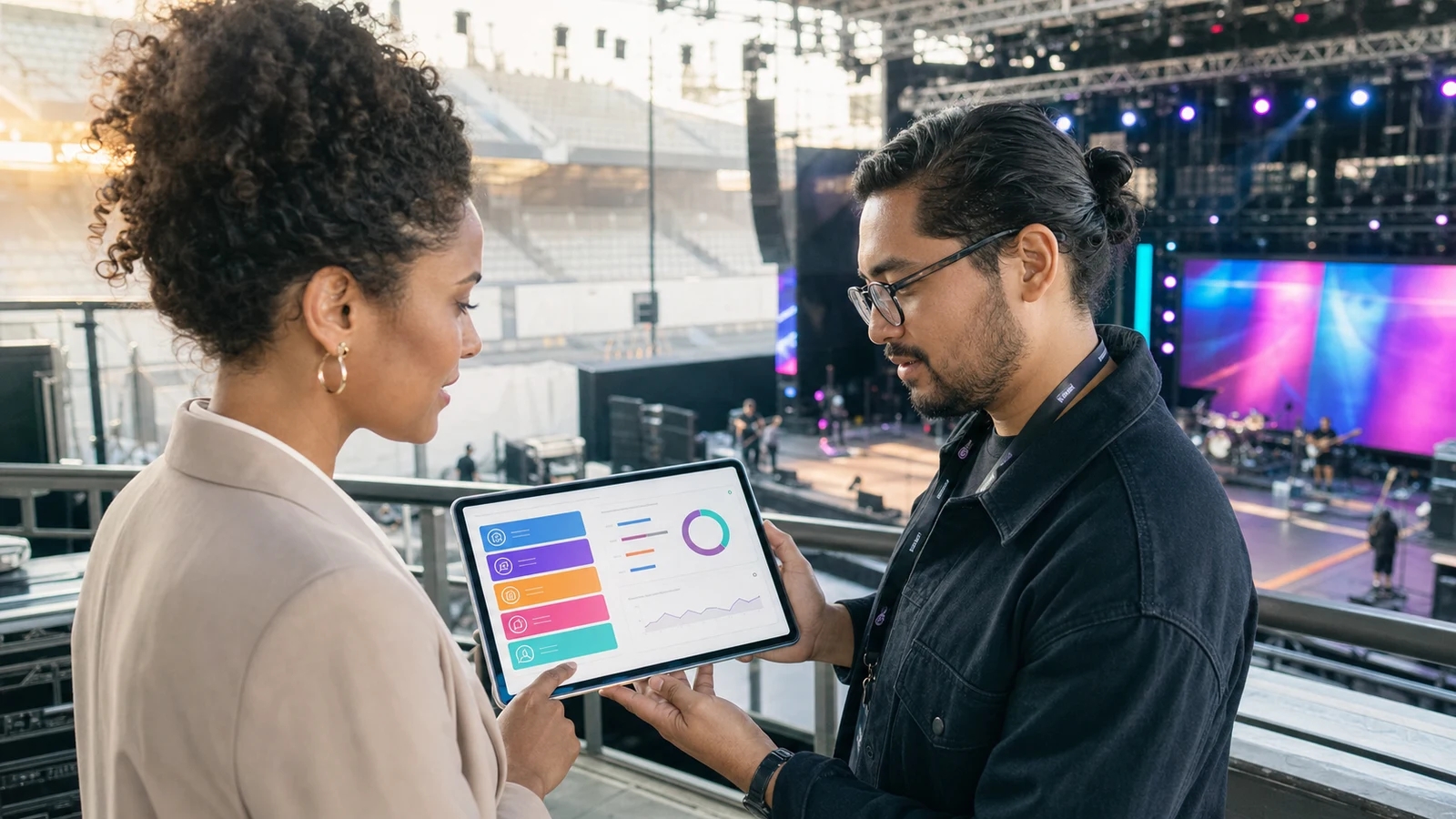
Rank sponsor categories with audience-based fit in Cultiq
A promoter workflow for turning artist audience signals into sponsor-category priorities without inventing brand demand, budgets, or revenue.