
Evaluate a concert sponsorship before requesting a package
A step-by-step Cultiq guide to reviewing Event Heat, audience demand, market fit, packaged value, activation potential, and sponsor readiness before outreach.
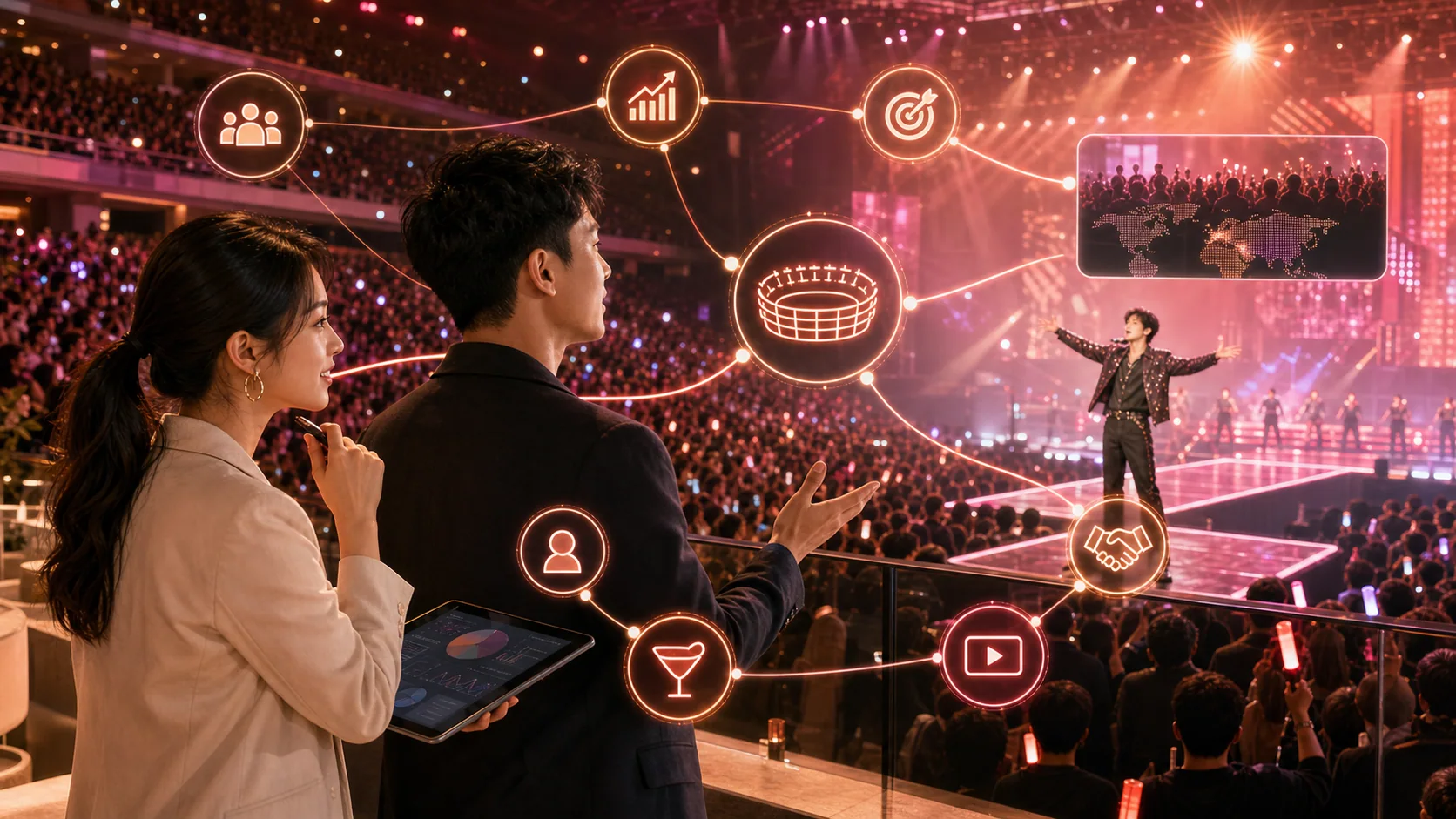

- A strong event creates attention. A strong sponsorship gives the brand a useful role inside that attention.
Venue capacity is easy to pitch and easy to misunderstand. Before requesting a sponsorship package, a brand should know whether demand is real, whether the audience belongs to the brief, and whether the event offers an activation the brand can turn into more than signage.
Start with the campaign job
Before opening Concert Discovery, define:
- Target market and audience.
- Campaign objective.
- Product category.
- Timing.
- Budget.
- Preferred activation format.
This prevents a sold-out show from becoming the strategy by default.
TakeawayA strong event creates attention. A strong sponsorship gives the brand a useful role inside that attention.
Step 1: review Event Heat
Open Concert Discovery and evaluate the Event Heat Score and its drivers:
- Audience demand: how much pull exists.
- Ticket velocity: how quickly demand converts.
- Brand lift: the association value for a sponsor.
- Market fit: whether the event matters in the target territory.
Read the breakdown. Two events can have similar composite scores for different reasons.
Step 2: test audience relevance
Ask:
- Who is likely to attend?
- Is the audience local, traveling, or mixed?
- Does it overlap with the brand’s buyer?
- Is the fandom behavior compatible with the intended activation?
- Can the brand offer something fans genuinely value?
The right audience at a smaller event can be more useful than a larger but less relevant crowd.
Step 3: understand the market context
Review the city, venue, date, and market. Consider:
- Whether the market is a campaign priority.
- Local cultural relevance.
- Competing events or brand activity.
- Timing within a launch or seasonal window.
- Operational feasibility for the brand team.
Market fit should be explicit, not inferred from the artist’s global fame.
Step 4: inspect the packaged value
Look beyond logo inventory. A useful package should clarify:
- Sponsorship tier.
- Fan or guest benefits.
- Content rights.
- Hospitality.
- On-site activation.
- Digital amplification.
- Product integration.
- Measurement opportunities.
Ask how each benefit supports the objective. If an asset cannot be connected to audience value or campaign measurement, it may not deserve budget.
Step 5: score activation potential
Imagine the fan experience:
- What does the brand enable?
- Where does participation happen?
- What can travel beyond the venue?
- How does the activation connect to the artist or event?
- What would fans remember after the show?
Strong activation formats may include access, utility, personalization, fan content, product experience, or meaningful hospitality. The exact form depends on the category and rights.
Step 6: identify the unknowns
Before requesting a package, list what still needs confirmation:
- Inventory availability.
- Exclusivity.
- Rights and territories.
- Production responsibilities.
- Artist participation.
- Measurement access.
- Cancellation and schedule conditions.
The request should be specific enough to get useful answers.
Step 7: save or request
Save promising events to the concert shortlist. When ready, submit a sponsorship request with the brand category, market focus, budget, and activation context.
Submission begins the commercial conversation. It does not guarantee inventory or final terms.
Common sponsorship mistakes
- Using venue capacity as demand.
- Selecting an event before defining the audience.
- Buying the largest package without mapping assets to objectives.
- Assuming artist fame equals local market fit.
- Ignoring content and usage rights.
- Treating on-site signage as a complete activation.
- Failing to define measurement before the event.
Request the right package
The goal is not to ask, “What sponsorship packages do you have?” It is to ask:
Which available package can deliver this audience outcome in this market through an activation the brand can execute?
That question produces a better conversation for the brand and the promoter.
Explore concert opportunities.
Frequently asked questions
A composite demand view built from audience demand, ticket velocity, brand lift, and market fit.
No. Capacity is a ceiling. Demand, audience, activation value, and brand fit determine whether the opportunity is useful.
Cultiq supports concert discovery, saved concert shortlists, and structured sponsorship requests for relevant opportunities.

Coordinate competing roster pitches in Cultiq
Help artist-management teams choose which represented act leads a brand opportunity without creating duplicate pitches or unsupported claims.

Run a weekly partnership pipeline review
Use My Matches to run a focused weekly review of artist, concert, and drama opportunities without overstating deal readiness.

Prepare a multi-market artist match request
Turn one global artist shortlist into a precise match request with market-specific roles, evidence, rights questions, and owners.