
Reading demand: market signals before you commit budget
Where the audience is moving, which categories are heating up, and how to time a partnership window instead of chasing one after it has closed.


- You cannot manufacture a cultural moment. But you can see one building and position for it — which is the entire difference between timing a deal and chasing one.
- An honest note on scope: Cultiq's broader market-intelligence surfaces are still maturing, and the parts that are illustrative are labeled as such. The live, shipped flow is discovery, FitMatrix scoring, the Cultiq Agent, and match requests — the spine you need to read fit and act on it.
A partnership signed at the right moment and the same partnership signed three months late are not the same deal. The first rides a rising wave of attention; the second pays a premium to join one that has already crested. In markets that move as fast as K-Pop, C-Pop, J-Pop, and Thai, timing is not a detail around the edges of a deal — it is most of the outcome. The good news: the windows are visible before they close, if you are reading the right signals.
Timing is most of the outcome
The problem is that timing usually gets treated as luck. It does not have to be. The signals that mark a rising window are observable — if you are watching for them before you have committed, instead of explaining them after.
TakeawayYou cannot manufacture a cultural moment. But you can see one building and position for it — which is the entire difference between timing a deal and chasing one.
Leading signals versus lagging ones
Most of the numbers brands react to are lagging: a campaign that already worked, an artist who has already broken out, a category everyone has already noticed. By the time a signal is obvious, the window it pointed to is often closing.
What a leading signal looks like
Leading signals are quieter — where audience attention is shifting, which categories are starting to heat up, which artists and events are gathering momentum before the mainstream catches on. Reading demand is the discipline of weighting the leading signals over the lagging ones, so you are positioned for where the market is going rather than where it has been.
- Sentiment moving on an artist or property before the press notices.
- Fandom activity spiking around a comeback, tour, or drama in pre-release.
- A category heating up in a market where your brand has room to lead rather than follow.
Live signals on the things you care about
Cultiq surfaces live signals — real-time activity, sentiment, fandom movement, and news — on the partnerships and options you are tracking. Instead of checking ten sources for ten artists, the movement that matters to your shortlist comes to you, so a shift in sentiment or a spike in fandom activity registers as a signal to act rather than a surprise after the fact.
That is the difference between monitoring a market and reacting to it: you see the window opening, not the press release announcing that it closed.
Timing the window
Put the two reads together — demand signals plus documented fit — and timing turns from a guess into a decision. You know which options fit your brand because FitMatrix scored them, and you know when demand around them is building because the live signals say so. The move is to enter when both line up: a strong-fit partnership in a rising window.
Fit tells you who. Demand tells you when. You need both — a perfect-fit partner in a dead window underdelivers, and a hot window around the wrong partner is a trap.
TakeawayAn honest note on scope: Cultiq's broader market-intelligence surfaces are still maturing, and the parts that are illustrative are labeled as such. The live, shipped flow is discovery, FitMatrix scoring, the Cultiq Agent, and match requests — the spine you need to read fit and act on it.
Frequently asked questions
Real-time activity, sentiment, fandom movement, and news on the partnerships and options you are tracking — surfaced so a shift registers as a prompt to act rather than something you discover after the window has closed.
Trends are usually lagging signals — by the time they are obvious, the window is closing. Reading demand weights leading signals (shifting attention, building fandom activity, categories starting to heat up) so you position before the wave crests, not after.
Some market-intelligence surfaces are still maturing and are labeled illustrative where they are. The live, shipped flow is discovery, FitMatrix scoring, the Cultiq Agent, and match requests — enough to read fit and time a window.
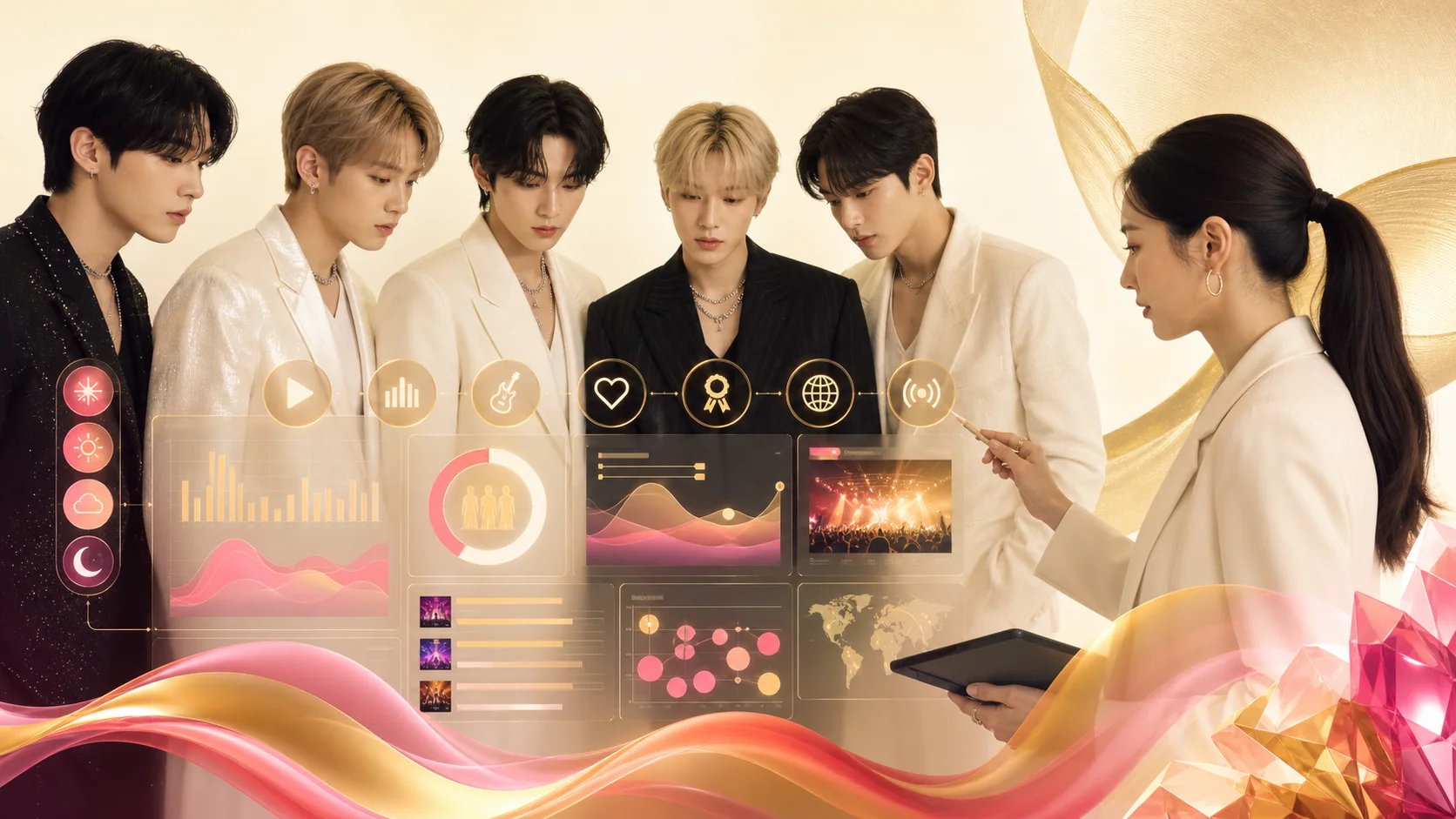
Music Intelligence: platforms, genre, tracks, awards, and tour context
A feature walkthrough of the Cultiq Music tab and how brands can read platform performance, streaming, genre, mood, tracks, awards, tours, and live music signals.
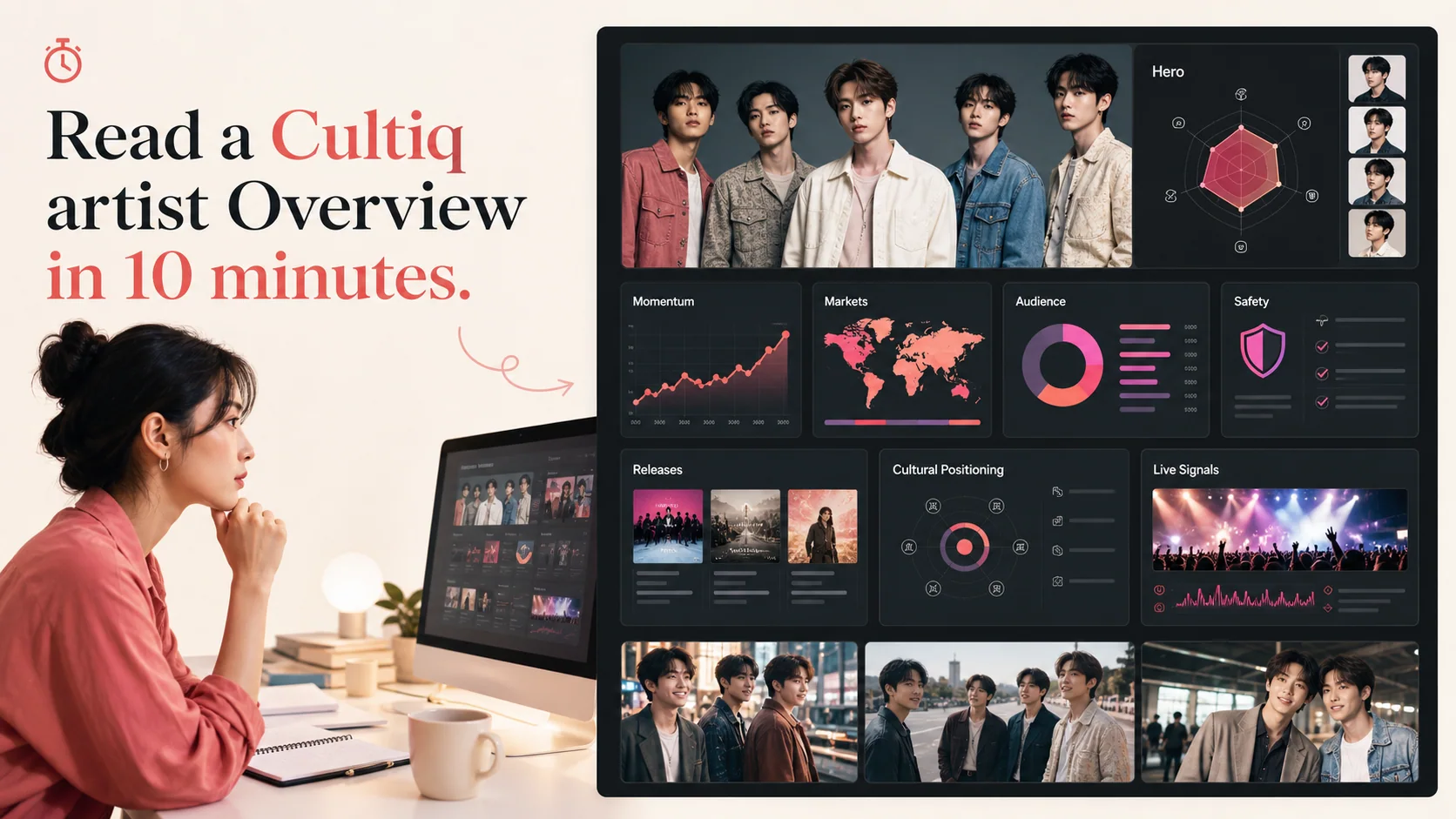
Read a Cultiq artist Overview in 10 minutes
A guided tour of the artist Overview: brand fit, momentum, audience, markets, safety, releases, cultural positioning, recommendations, and live signals.

Scout rising artists in Cultiq: a five-step workflow
A workflow for turning a campaign brief into a defensible shortlist of rising K-Pop, C-Pop, J-Pop, and Thai artists — using discovery, audience, momentum, and fit.